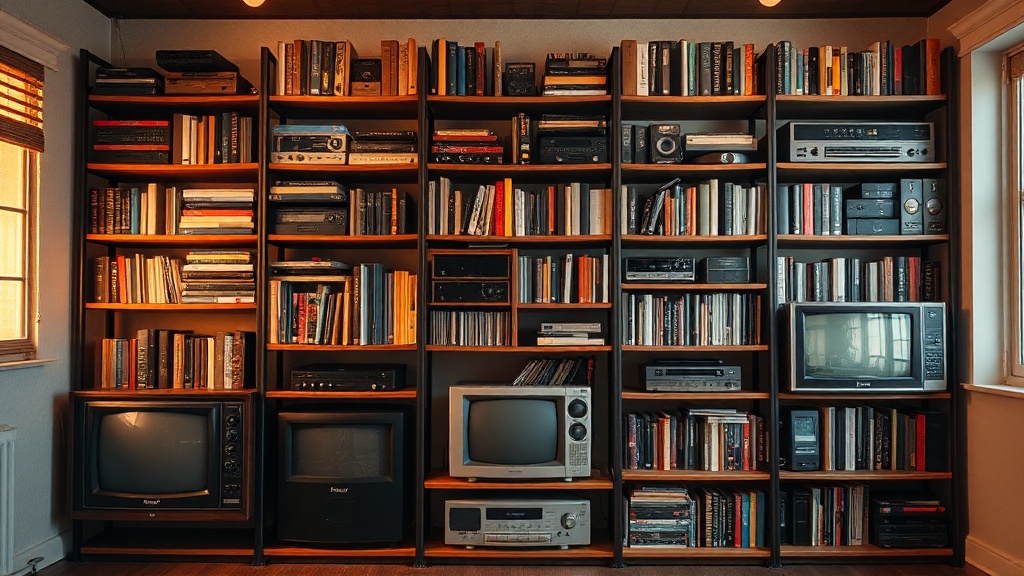
Why Your Vintage Media Collection Needs Specialized Shelving

Most collectors assume that as long as a shelf is sturdy, their vintage media is safe. They think a heavy-duty wooden bookshelf is enough to protect a collection of Beta tapes, VHS, or rare cassettes. This is a mistake. Physical media isn't just heavy; it's chemically sensitive and structurally vulnerable. A standard bookshelf provides support, but it doesn't account for the way gravity, vibration, and even the material of the shelf itself can affect long-term preservation. This post looks at why your storage method matters more than you think and how to choose setups that actually protect your investment.
If you're storing your collection in a way that relies solely on weight-bearing capacity, you're missing the point of preservation. The goal isn't just to keep things from falling; it's to prevent the physical degradation of the media itself. Whether it's the slight tilt of a tape causing a spool to unspool or the way certain woods off-gas chemicals, the environment of your shelf is just as important as the room temperature.
Does the material of my bookshelf affect my tapes?
You might think a shelf is just a shelf, but the materials used in manufacturing can wreak havoc on magnetic media. For instance, many cheap particle board shelves use glues and resins that release volatile organic compounds (VOCs) over time. These gases can settle on your tapes and interact with the oxide layer. While it might not be an immediate disaster, the long-term effect of a chemically active environment is never good for vintage electronics or media.
Metal shelving is a popular choice because it's durable, but it comes with its own set of headaches. If you aren't careful, a metal shelf can act as a giant magnet for any stray electromagnetic interference in your home. While modern electronics are shielded, older, unshielded components near your collection might react to the proximity of large metal structures. If you go the metal route, ensure your shelving is powder-coated or treated to prevent rust, which can flake off and contaminate your media.
Wooden shelves are the classic choice, but they aren't perfect. Hardwoods like oak or maple are great, but avoid anything that hasn't been properly cured. Unfinished wood can hold onto moisture, leading to mold—a nightmare for any collector. If you want to check the safety of materials, the EPA website offers great resources on how indoor air quality and chemical off-gassing can affect your environment.
How should I stack my magnetic media?
One of the biggest mistakes I see in home collections is the "vertical stack." People tend to stack VHS or Beta tapes on top of one another to save space. This is a disaster waiting to happen. The weight of the top tapes puts uneven pressure on the bottom ones, which can lead to crushed shells or, even worse, deformed tape spools. If the tape shape is compromised, your player will struggle to track the media, leading to playback errors or even a total failure.
- Horizontal Storage: This is generally the safest way to store tapes. Laying them flat ensures the weight is distributed evenly across the shell.
- Vertical Orientation: If you must store them vertically (like books), ensure they are in a tight, organized row. If they lean at an angle, the internal tension of the tape can cause it to become unevenly wound.
- The "One-Inch Rule": Never pack your shelves so tightly that you can't slide a finger between the items. Air circulation is your friend.
When you pack media too tightly, you also make it much harder to inspect individual items for damage. You want to be able to pull a single tape out to check for signs of mold or casing cracks without disturbing the entire collection. A collection that is too dense is a collection that is difficult to maintain.
What is the best way to prevent vibration damage?
Vibration is a silent killer of vintage media. If your shelving unit is sitting directly on a floor that experiences heavy foot traffic, or if it's near a sub-woofer, your tapes are taking a beating. Constant micro-vibrations can cause the tape to shift slightly within the shell, potentially leading to physical scratches or even causing the tape to unspool if the mechanism is already weakened.
To mitigate this, consider using vibration-dampening pads under your shelving feet. These are often used in high-end audio setups to isolate equipment from floor vibrations. It's a small step, but it can make a massive difference in the longevity of your collection. You can often find these at music retailers or specialized hardware stores. If you're curious about the physics of how vibration affects sensitive equipment, the ScienceDirect database has extensive research on mechanical vibrations and structural integrity.
Another tip is to avoid placing your media-heavy shelves against walls that share a structure with heavy machinery or high-traffic areas. Even the vibration from a heavy laundry machine in the next room can travel through the floor and into your shelving unit. It's a subtle threat, but one that collectors often overlook until they're staring at a ruined tape.
A Note on Weight Distribution
Always load your heaviest items on the bottom shelves. This lowers the center of gravity for the entire unit, making it much more stable. A top-heavy shelving unit is a liability, especially in a home where things might get bumped or moved. If you have a large collection of heavy Beta tapes or heavy-duty VHS boxes, keep them low. This isn't just about preventing a tip-over; it's about ensuring the structural integrity of the shelf itself. A shelf that bows under weight will create an uneven surface for your media, and an uneven surface leads to uneven pressure on your tapes.