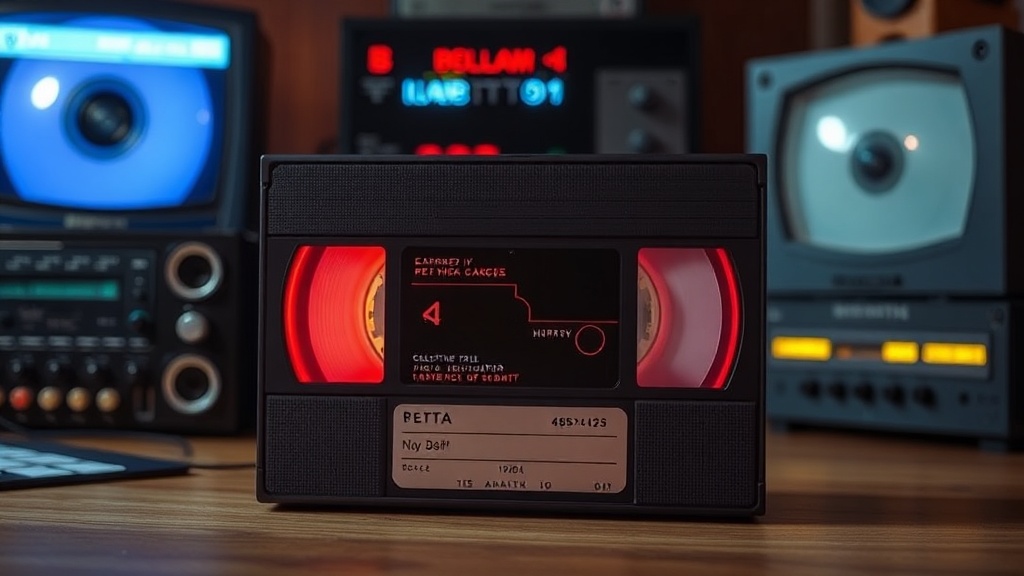
The Ultimate Beta Tape Collecting Guide for Retro Enthusiasts

How to Identify Rare and Valuable Beta Tape Releases
Essential Equipment for Playing and Digitizing Beta Tapes
Proper Storage Techniques to Preserve Your Video Collection
Top Online Marketplaces for Finding Beta Tapes in 2024
Common Beta Tape Issues and How to Repair Them
Beta tapes represent one of the most fascinating corners of vintage electronics collecting. This guide covers everything from spotting valuable releases at flea markets to building a proper playback setup that won't chew up irreplaceable tapes. Whether you're drawn by nostalgia, investment potential, or the simple joy of analog media, there's never been a better time to explore this overlooked format.
What Makes Beta Tapes Worth Collecting Today?
Beta tapes hold value for several reasons that VHS simply can't match. Sony's format—technically superior to VHS in picture quality—lost the format war but won the hearts of serious collectors. The smaller cassette size, better resolution, and build quality mean working Beta equipment tends to outlast comparable VHS decks.
The scarcity factor drives prices. Studios stopped releasing new Beta titles by 1993. Physical media degrades, and many tapes got discarded during the DVD transition. Surviving copies—especially sealed releases or obscure titles—command real money on the secondary market.
Here's the thing: Beta collecting isn't just about the tapes. The community surrounding this format tends toward serious enthusiasts. The r/Betamax subreddit maintains active repair guides and trading posts. Local meetups in cities like Toronto and Vancouver attract collectors swapping tapes and technical knowledge.
What Equipment Do You Need to Actually Play Beta Tapes?
You'll need three things: a working Beta deck, proper cables, and a display that accepts analog signals. That last requirement trips up newcomers who assume any modern TV will work.
Sony manufactured the bulk of Beta equipment. The Sony SL-HF600 and SL-HF1000 SuperBeta Hi-Fi models represent the pinnacle of consumer decks—expect to pay $300-600 for units in working condition. The Sony SL-2000 portable deck offers flexibility but commands premium prices ($400-800) due to rarity.
Worth noting: Professional/Broadcast Beta (Betacam) uses physically different cassettes. Don't confuse these with consumer Beta/Betamax tapes—they won't fit in home decks.
Connection options vary by deck age:
- RF output (coaxial) — works with any TV but delivers worst picture quality
- Composite video (yellow RCA) — decent quality, available on most decks from 1984 onward
- S-Video — best consumer option, found on higher-end models like the SL-HF1000
Modern TV compatibility presents challenges. Many newer sets lack analog inputs entirely. The Oretek AV to HDMI converter ($25-40) handles basic upscaling, though purists prefer the RetroTINK-2X or 5X for better image processing.
Where Should You Hunt for Beta Tapes?
Finding tapes requires patience and knowledge of where sellers hide their stock. Estate sales in older neighborhoods often yield the best results—look for homes where the owner maintained electronics from the 1980s. The catch? You'll need to arrive early. Dealers know this market now.
Specific hunting grounds worth targeting:
- Estate sales — Check EstateSales.net for listings in your area; filter by keywords like "electronics" or "Sony"
- Thrift stores — Value Village and Salvation Army locations near retirement communities
- Facebook Marketplace — Search "Beta tapes," "Betamax," and misspellings like "Betta"
- eBay — Best for specific titles; filter by "Sold" listings to verify actual market prices
- Garage sales — Old-money neighborhoods in Burlington, Oakville, and similar communities
Collector conventions provide another avenue. The Midwest Gaming Classic and Portland Retro Gaming Expo typically host vendors with vintage media. These events let you inspect tapes before buying—something online purchases don't allow.
How Much Are Beta Tapes Actually Worth?
Values range from landfill fodder to four-figure collectibles. The difference lies in title rarity, condition, and format exclusivity.
| Category | Examples | Price Range (USD) |
|---|---|---|
| Common released titles | Top Gun, Ghostbusters, mainstream 1980s hits | $5-20 |
| Horror/OOP titles | Early Friday the 13th, obscure slashers | $50-200 |
| Sealed rare releases | Star Wars original release, Disney classics | $200-1,500+ |
| Recorded TV/promo tapes | Local news broadcasts, promo reels | $10-100 (niche dependent) |
| Adult titles (vintage) | Early 1980s releases | $30-150 |
Condition grading matters enormously. A sealed tape with shelf wear might fetch 60% of mint value. Opened but unwatched tapes with pristine labels and no mold—more on that later—typically hit 40-50% of sealed pricing.
That said, don't overpay for common titles out of desperation. Star Wars on Beta appears regularly; wait for the right copy rather than grabbing a beat-up ex-rental for $100.
What Condition Issues Should You Watch For?
Mold represents the biggest threat to Beta collections. The format's tape path design traps moisture, and reels provide perfect breeding grounds for fungus. White or gray powder on the tape edges—or that distinctive musty smell—means contamination. Playing moldy tapes destroys them and infects your deck.
Storage history clues appear in the details:
- Check the reel windows for discoloration
- Smell the tape (seriously)—musty odors indicate basement storage
- Inspect the tape path guides for sticky residue
- Look for label damage that suggests water exposure
Sticky Shed Syndrome affects some tape formulations, particularly Ampex/Quantegy stock from the early 1980s. Affected tapes squeal during playback and shed oxide onto the heads. Baking (yes, literally heating the tape) provides temporary playback windows, but this is advanced restoration territory.
How Do You Store a Beta Collection Properly?
Proper storage prevents the degradation issues that ruin most vintage media. Beta tapes prefer stable environments—think wine cellar conditions rather than attic or garage storage.
Temperature should stay between 60-70°F (15-21°C) with relative humidity at 40-50%. Fluctuations cause more damage than steady suboptimal conditions. A closet in a climate-controlled home beats a garage with seasonal temperature swings.
Physical storage matters too:
- Store tapes upright (like books) rather than stacked flat
- Keep them in their original cases—cardboard sleeves offer minimal protection
- Avoid direct sunlight (fades labels and heats tape)
- Keep away from speakers or other magnetic sources
Worth noting: Rewind tapes before storage. Loose tape on the reels can develop edge damage or "spoking" (warped reels) over decades. A fully rewound tape has tension supporting the structure.
Are Beta Tapes Better Than VHS?
Technically, yes—mostly. Beta's 250-line resolution beat VHS's 240 lines (though the gap narrowed with later VHS improvements). The smaller cassette size meant tighter tape packs and more consistent tracking. Build quality on Sony decks typically exceeded JVC, Panasonic, and RCA competition.
But here's the practical reality: Beta's recording time limitations doomed it. A L-750 tape holds maximum six hours—compared to VHS's eight-hour EP mode. Movie studios preferred the longer format for consumer releases. By 1988, VHS held 95% market share. Beta became a niche.
For collectors today, Beta's technical advantages matter less than scarcity and community. VHS collecting is mainstream (relatively). Beta remains the province of dedicated enthusiasts—the kind of people who repair their own equipment and maintain technical knowledge of analog formats.
What Are the Best Beta Titles to Hunt For?
Certain categories consistently outperform the market. Horror collectors drive prices for out-of-print titles—early Friday the 13th releases, obscure slashers, and foreign films that never got DVD releases.
Disney's early Beta releases command premiums. Snow White and the Seven Dwarfs (1984 release), The Black Cauldron, and Song of the South regularly sell for $100-300 in good condition. The limited distribution window for some titles—combined with Disney's vault strategy—created artificial scarcity.
Music video collections represent another hot category. MTV-era compilations featuring artists who've since passed (Prince, Michael Jackson, David Bowie) attract both media collectors and music fans. The Friday Night Videos series—recorded off-air—has cult following.
That said, personal interest should drive your collecting. A complete run of Jane Fonda Workout tapes won't impress serious collectors, but if 1980s fitness culture fascinates you, that's where you should focus. The best collections reflect coherent themes rather than scattershot purchasing.
Getting Started Without Breaking the Bank
Newcomers should start with equipment, not tapes. A working deck matters more than a shelf of movies you can't watch. Budget $200-400 for an entry-level Sony SL-2000 or SL-3000—decks common enough to find parts for, reliable enough to trust with your tapes.
Build slowly. Pick a focus area—horror, Disney, music, sci-fi—and learn that market's pricing patterns. Track sold eBay listings for three months before making significant purchases. Join Tapeheads.net (the premier analog media forum) and read their Beta-specific threads before posting questions.
The community rewards patience and knowledge. Rush in buying "rare" tapes at inflated prices and you'll learn expensive lessons. Take time understanding condition grading, equipment maintenance, and market cycles, and you'll build something meaningful. Beta collecting isn't about accumulation—it's about preservation of a format that deserved better than the market gave it.