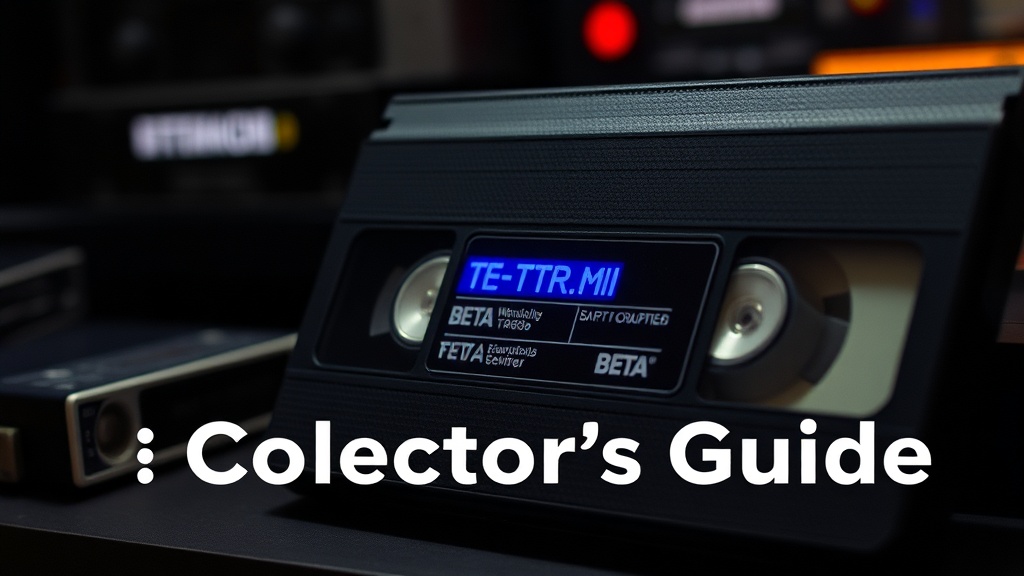
How to Clean and Restore Beta Tapes: A Collector's Guide

What Causes Beta Tapes to Degrade Over Time?
Magnetic tape deterioration stems from binder hydrolysis — commonly called "sticky shed syndrome" — where the glue holding magnetic particles to the polyester base breaks down. Beta tapes, despite their reputation for quality, aren't immune. Temperature fluctuations, humidity above 60%, and poor storage accelerate the damage. The result? Playback issues, picture dropouts, and in worst cases, a tape that refuses to move at all.
Here's the thing: not all degradation is visible. A tape can look pristine on the outside while the magnetic layer turns gummy inside. The catch? Once sticky shed advances too far, even professional restoration becomes difficult. Early detection matters more than perfect storage conditions.
Beta format tapes (Betamax) were Sony's answer to VHS, launched in 1975. They offered superior resolution — 250 lines versus VHS's 240 — but lost the format war. Today, surviving Beta tapes represent a finite resource. Titles not released on modern formats exist only on these aging cassettes. That's why proper cleaning and restoration techniques have become vital skills for serious collectors.
Can You Clean Beta Tapes at Home Safely?
Yes — with the right approach and realistic expectations. Home cleaning works for surface dust, light mold, and minor oxide shedding. Severe sticky shed syndrome or physical tape damage requires professional intervention at facilities like Specs Bros or similar archival services.
Before starting, gather proper supplies. You'll need:
- 99% isopropyl alcohol (not 70% — the water content causes damage)
- Lint-free microfiber cloths (Kimtech Kimwipes work well)
- Cotton swabs (Q-tips) for tight spaces
- A clean, well-lit workspace
- Latex or nitrile gloves
- A rewinder or working Beta deck for tape movement
Start with the cassette shell. Wipe down all exterior surfaces with alcohol on a microfiber cloth. Pay attention to the tape door — that sliding plastic cover protecting the tape pack. Grime accumulates here and transfers to the tape during playback. Work gently; vintage plastic becomes brittle.
For the tape itself, never touch the magnetic surface directly with bare fingers. Skin oils attract dust and promote mold growth. If the tape shows white or green spots — mold — that's where caution becomes critical. Isopropyl alcohol kills surface mold, but aggressive rubbing damages the oxide layer. Dab, don't scrub.
Opening the Cassette (If Necessary)
Some cleaning requires opening the shell. Most Beta cassettes use small Phillips-head screws — typically five per shell. Document screw placement before removal; they're not always identical lengths. The shell splits into two halves. Be gentle — the tape pack sits on plastic hubs with delicate brake mechanisms.
Never force a stuck shell. Old plastic cracks easily. If screws are corroded (common in basement finds), apply penetrating oil and wait. Patience prevents catastrophic damage.
What's the Best Method for Cleaning Moldy Beta Tapes?
The safest approach combines manual cleaning with controlled playback through a "sacrificial" deck — an inexpensive, working Beta machine you're willing to risk. Mold releases spores during playback that contaminate tape heads and transport mechanisms. A dedicated cleaning deck prevents cross-contaminating your primary equipment.
Here's the process:
- Assessment: Examine the tape pack through the shell windows. White, green, or black spots indicate mold. Severe cases — mold penetrating deep into the pack — need professional treatment.
- Surface cleaning: With the tape door open, gently wipe exposed tape with alcohol-dampened Kimwipes. Rotate the supply reel by hand to expose fresh tape sections.
- Hand-winding: Slowly wind the entire tape from one reel to the other, wiping the exposed surface as it moves. This takes time. Rush, and you'll snap the tape.
- Playback cleaning: Run the tape through your sacrificial deck. The mechanical wiping action of the tape path removes residual mold. Clean the deck's heads, capstan, and pinch roller immediately afterward with cleaning fluid and chamois tips.
Worth noting: some collectors bake tapes suffering from sticky shed syndrome — heating them in a food dehydrator at 130°F for 4-8 hours. This temporarily drives out moisture and allows playback. It's controversial. Get it wrong, and the tape becomes unplayable permanently. For irreplaceable recordings, professionals at Great Bear Media offer controlled baking with proper cooldown protocols.
How Do You Repair Physical Tape Damage?
Broken tapes, creased sections, and damaged leader tape are fixable. You'll need a splicing block, professional splicing tape (not Scotch tape — the adhesive migrates and destroys magnetic oxide), and a razor blade or dedicated tape cutter.
Splicing works like this:
- Locate the break. If the tape snapped cleanly, you're lucky. Creased or stretched sections need removal — they cause tracking errors during playback.
- Place the tape in the splicing block. The 90-degree guide ensures a clean, perpendicular cut.
- Cut both ends square. Angled splices catch on tape guides and cause jams.
- Apply splicing tape to the non-magnetic (dull) side. Never cover the oxide layer — you'll create a permanent dropout.
- Press firmly and trim excess.
For leader replacement — that translucent plastic at the tape beginning — use professional polyester leader stock. The original leader often becomes yellow and brittle. Replacing it prevents breaks during rewind cycles.
| Damage Type | Home Repair Possible? | Recommended Approach | Cost Estimate |
|---|---|---|---|
| Surface dust/grime | Yes | Isopropyl alcohol + microfiber | $10-15 supplies |
| Light mold | Yes (with caution) | Manual cleaning + sacrificial deck | $50-100 for deck |
| Sticky shed syndrome | Risky | Professional baking/service | $25-75 per tape |
| Clean tape break | Yes | Splicing block + proper tape | $30-50 tools |
| Creased/stretched tape | No | Professional re-splicing | $40-100 per repair |
| Severe mold (deep pack) | No | Archival recovery service | $75-200 per tape |
Equipment Maintenance Matters
Your Beta deck needs attention too. Dirty heads, worn pinch rollers, and misaligned tape paths cause more damage than dirty tapes. Clean heads with chamois tips and head cleaning fluid (not alcohol — it's too harsh for some head materials) every 10-20 hours of playback. Check the pinch roller for hardening or flat spots. A glazed roller slips and creases tapes.
That said, finding replacement parts grows harder yearly. Sony stopped manufacturing Beta decks in 2002. Professional SL-HF1000 or SLO-1800 series machines command premium prices — $500-2000 depending on condition. Consumer-grade Sony SL-5000 or Sanyo Betamax units offer affordable entry points at $100-300, though they lack the build quality of pro models.
When Should You Consider Professional Restoration?
Some situations exceed home capabilities. Magnetic layer flaking — where the oxide comes off on your fingers or cleaning cloths — indicates advanced deterioration. Professional facilities use specialized equipment: tape baking ovens with precise temperature control, vacuum-based cleaning systems, and archivist-grade splicing stations. Organizations like The Library of Congress Preservation Division publish guidelines that top restoration shops follow.
The catch? Professional work isn't cheap. Single-tape restoration runs $50-200 depending on damage severity. For home recordings — family weddings, childhood memories — that cost often makes sense. For commercial releases available elsewhere, replacement might prove more economical than restoration.
Collectors in North America can contact regional archival services. The Association of Moving Image Archivists maintains a directory of qualified providers. Expect turnaround times of 2-8 weeks for non-rush service.
Storage Practices That Prevent Future Damage
Clean tapes deserve proper homes. Store Beta cassettes vertically — like books on a shelf — not stacked flat. Horizontal storage warps the reels over time. Temperature should stay between 60-70°F with relative humidity at 40-50%. Basements and attics kill tapes; climate-controlled living spaces preserve them.
Use original cases when possible. Sony's clamshell cases offer better protection than cardboard slipcases. If cases are missing, archival polypropylene cases from suppliers like Bags Unlimited provide acid-free protection.
Rewind tapes fully before storage. Tension from partial winding creates "print-through" — where magnetic patterns bleed between layers, creating ghost images during playback. Full winding distributes tension evenly.
Finally, play your tapes occasionally. Media preservation through use sounds counterintuitive, but magnetic tapes benefit from periodic exercise. Once yearly, fast-forward and rewind each tape to redistribute lubricants and prevent layer-to-layer sticking. Just ensure the deck is clean first.
Steps
- 1
Inspect and Assess Tape Condition
- 2
Clean the Tape Housing and Reels
- 3
Treat and Rewind the Magnetic Tape