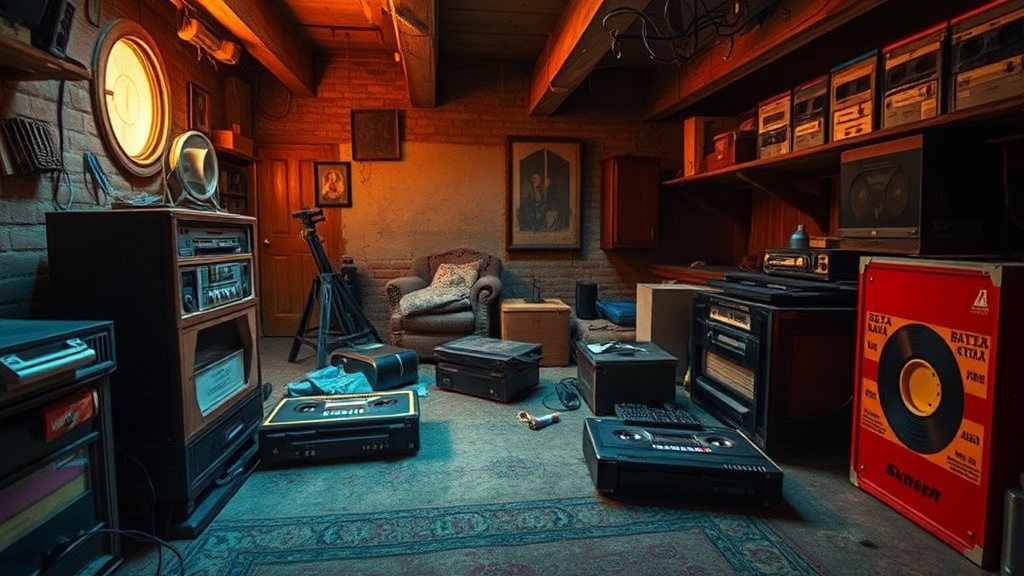
Can Beta Tapes Survive in Your Basement or Attic?

This guide explains exactly how temperature and humidity affect Beta tape longevity, why climate-controlled storage matters more than most collectors realize, and what you can do right now to protect tapes you already own. You'll learn the specific environmental thresholds that trigger deterioration, how to identify early warning signs of moisture damage, and practical storage solutions that don't require expensive equipment.
What's the Ideal Temperature and Humidity for Beta Tape Storage?
Magnetic media degrades through chemical processes that accelerate exponentially with heat. Beta tapes store information on oxide particles bonded to polyester tape stock using polyurethane binders. These binders absorb moisture from the air, and when temperatures rise above comfortable room levels, the chemical breakdown begins.
The Library of Congress recommends storing magnetic media at temperatures between 60-70°F (15-21°C) with relative humidity between 35-50%. These aren't arbitrary numbers. Polyester base film expands and contracts with humidity changes. When a tape absorbs moisture, it grows slightly thicker, increasing friction against tape heads and guides. Worse still, the magnetic oxide layer can separate from the base when the binder swells too much.
Cold isn't necessarily better, either. Temperatures below 50°F (10°C) make the tape stock brittle. Fast-forwarding a cold Beta tape can cause stretching or cracking, especially in the leader tape sections. The magnetic particles themselves don't degrade in cold, but the mechanical properties of the tape change dramatically. You want stable, moderate temperatures—not freezing, not tropical.
Humidity fluctuations matter as much as absolute levels. A tape that cycles between 30% and 70% relative humidity undergoes repeated expansion and contraction stress. This weakens the oxide adhesion over years. Ideally, you want consistent conditions year-round. Variations of more than 10% relative humidity within a month signal problematic storage conditions.
The National Archives specifically warns against storing magnetic tapes in areas with uncontrolled climates. Basements often run too humid. Attics run too hot. Garages experience both extremes. Even interior closets on exterior walls can experience temperature swings that shorten tape lifespan from decades to mere years.
How Can You Tell If Moisture Has Already Damaged Your Tapes?
Before you lose footage permanently, tapes usually show warning signs. Sticky Shed Syndrome represents the most common moisture-related failure mode in magnetic tapes. The polyurethane binder absorbs enough moisture that it becomes tacky. When you try to play an affected tape, it deposits gummy residue on the tape heads, capstans, and guides. You'll notice playback problems—dropouts, squealing sounds from the transport mechanism, or the picture breaking into noise.
Check the tape pack by holding the cassette up to bright light. A healthy tape pack looks uniform and smooth. Moisture-damaged tapes often show windowing—gaps between the tape layers that let light through. This indicates the tape has expanded unevenly or the wind is loose from previous expansion cycles. Windowed tapes play poorly and risk edge damage.
Smell the cassette when you open it. A musty, vinegar-like odor indicates acetate decay (though Beta tapes use polyester, not acetate, similar chemical processes can produce comparable smells in degraded binders). Any sharp chemical smell suggests breakdown of the tape components. Clean magnetic tape should smell like... nothing, really. Maybe a faint plastic scent.
Look at the tape edge through the cassette window. White powder or crystalline deposits indicate binder breakdown products leaching to the surface. These deposits interfere with playback and can permanently damage tape heads. If you see white residue on the cassette shell itself, that tape needs professional treatment before any playback attempt.
Physical inspection helps, but the only definitive test is attempted playback with careful monitoring. Use an old, expendable Beta deck if you have one. Play the tape for thirty seconds, then stop and examine the tape path. Any sticky residue means the tape has Sticky Shed Syndrome and needs baking or professional reformatting before further use. Ampex data recovery services document this phenomenon extensively for professional archivists.
Where Should You Store Beta Tapes If You Don't Have a Climate-Controlled Room?
Not everyone can dedicate a purpose-built archive room to their collection. Practical solutions exist for normal homes. Interior closets work better than exterior walls—choose a closet in the center of your home, away from bathrooms and kitchens (humidity sources) and away from heating vents. The more buffered the space from external temperature swings, the better.
Plastic storage bins with tight-fitting lids help buffer humidity changes. Add desiccant packs—silica gel packets work, though you need to regenerate them in the oven periodically. Better still, use conditioned storage materials. Archival-quality polyethylene boxes cost more than Rubbermaid totes but provide chemical stability that won't interact with the tape cassettes over decades.
Store tapes vertically, like books on a shelf. Stacking tapes horizontally puts pressure on the bottom cassettes and can warp the shells or cause uneven tape pack wound tensions. Vertical storage distributes weight properly and allows air circulation around each cassette. Don't pack them too tightly—you want some airflow to prevent trapped humidity pockets.
Consider passive climate buffering. A closet full of tapes stabilizes its own temperature better than an empty closet—the mass of the plastic and tape stock resists rapid changes. Adding more tapes actually helps. If you have a small collection, store tapes in a heavy cabinet or chest rather than open wire shelving. The furniture mass buffers temperature swings.
Monitor what you can't control. Buy an inexpensive digital hygrometer and check it monthly. If your storage area regularly exceeds 60% relative humidity, you need active dehumidification. Small electric dehumidifiers work for closets. For serious collections, consider a small wine cooler—not for cooling, but for humidity control. Wine coolers maintain 50-70% relative humidity by design, and many allow you to set the temperature in the ideal range for magnetic media.
Handling Tapes After Storage
Temperature acclimatization matters when moving tapes between environments. If you've stored tapes in a cool basement and bring them to a warm room, condensation forms on the cold surfaces. This is exactly what you're trying to avoid. Let tapes sit sealed in their containers for several hours—ideally overnight—before opening them in a new temperature environment.
The same applies in reverse. Taking warm tapes into air-conditioned spaces causes condensation on the outside of the cassette. Always let tapes reach ambient temperature before playback. This patience prevents moisture from reaching the tape stock itself.
Rewinding and Maintenance Cycles
Stored tapes need exercise. Once every year or two, fully rewind and fast-forward each tape. This redistributes lubricants in the tape pack, prevents the layers from bonding to each other, and checks for developing problems. If a tape sticks during this process, stop immediately—that's a warning sign requiring attention.
Label everything clearly. You don't want to handle tapes repeatedly trying to find specific content. Each handling instance introduces risk. Good labeling means you retrieve exactly what you need, check it once, and return it properly.
Your Beta tapes can last fifty years or more in proper conditions. In poor conditions, you might have five years before deterioration becomes noticeable. The choice—and the consequences—are entirely yours to manage.