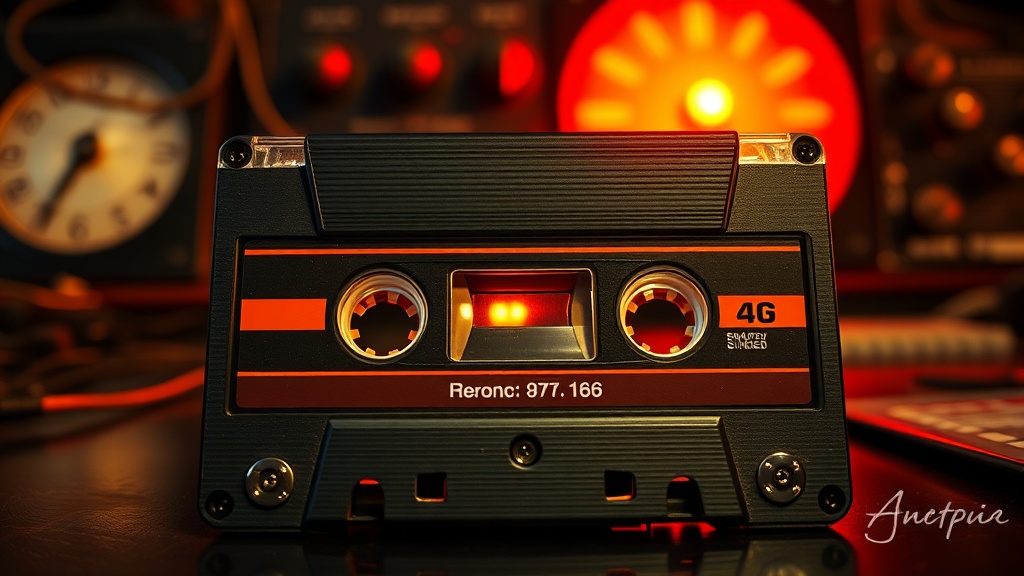
Beyond the Rewind: Guarding Your Cassette Tapes from Magnetic Fade and Sticky Situations

Did you know that the lifespan of a properly stored compact cassette tape can often exceed 30 years—sometimes outliving early digital formats—yet improper storage can ruin it in mere months? This post dives into practical, easy ways to prevent two insidious forms of cassette tape degradation: tape bleed and demagnetization. Keeping these analog treasures sounding their best really boils down to understanding a few key principles.
What Exactly is 'Tape Bleed' and How Can You Spot It?
Tape bleed, also known as print-through, is when the magnetic signal from one layer of tape transfers onto adjacent layers. Imagine a ghostly echo preceding or following the main audio—that's print-through. You’ll usually hear it as a faint, muffled sound before a loud passage or after a quiet one. Visually, you might even notice a slight shadow or impression on the tape itself if it’s severely affected. This phenomenon happens most often when tapes are wound and stored under tension for long periods, especially in fluctuating temperatures. The magnetic particles essentially 'leak' onto neighboring sections, blurring the pristine audio.
Is Demagnetization a Real Threat to Your Cherished Cassettes?
Beyond print-through, demagnetization poses another significant—and often invisible—threat to your collection. This isn't just about stray magnets; it's a gradual loss of the recorded magnetic signal, leading to reduced fidelity and, eventually, silence. Your tapes are susceptible to magnetic fields from unexpected places: unshielded speakers, power transformers, older TVs, and even certain electronic devices. A common culprit is also an improperly demagnetized tape head on your player, which can slowly erase high frequencies with each pass. The impact of demagnetization is insidious; it strips away the vibrancy and detail, leaving your audio sounding dull, distorted, or even completely wiped. It’s a silent destroyer, chipping away at the sound until what was once vibrant is barely there.
What Are the Simplest Ways to Protect Your Analog Audio Long-Term?
Protecting your analog audio doesn’t require a specialized vault, but it does demand mindful habits. First, always store your cassettes upright, never stacked flat, to minimize pressure on the tape pack. Keep them in their cases, away from direct sunlight, heat sources, and any obvious magnetic fields like speakers or subwoofer enclosures. A cool, dry, stable environment is ideal; think of a bookshelf in a climate-controlled room. For more detailed insights on general storage, check out this guide from the