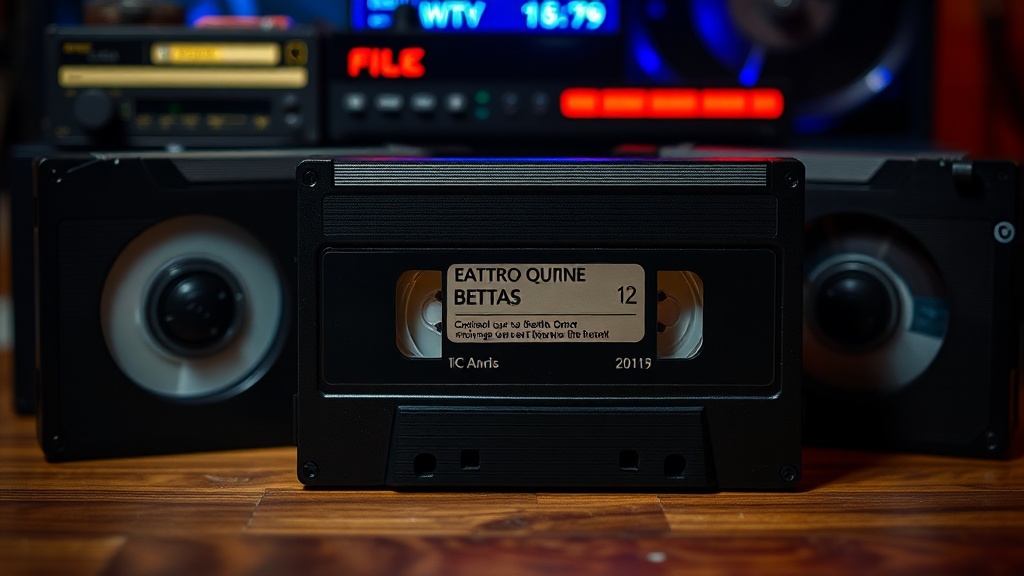
5 Rare Beta Tapes Every Collector Should Hunt For

The Texas Chain Saw Massacre (1974) - Unrated Version
Sleeping Beauty (1959) - Early Disney Black Diamond Release
Star Wars (1977) - Original CBS/Fox Rental Edition
Halloween (1978) - Media Home Entertainment Release
The Beatles Let It Be (1970) - Documentary Release
Beta tapes represent one of the most fascinating niches in vintage electronics collecting. This post breaks down five genuinely rare Beta format releases that command serious attention at auction, estate sales, and collector forums. Whether you're building a focused Beta collection or simply want to understand which tapes justify the hunt, these releases offer historical significance, scarcity, and real market value.
What Makes a Beta Tape Rare?
Rarity in Beta collecting stems from limited production runs, regional exclusivity, and the format's relatively short commercial lifespan. Unlike VHS, which dominated North American homes for two decades, Sony's Betamax format lost the format war quickly. Many titles saw Beta releases in the early 1980s before studios abandoned the format entirely.
The rarest tapes typically fall into three categories: early releases (1975-1978), foreign-market exclusives never issued on VHS, and promotional or rental-only editions with limited distribution. Condition matters enormously. Sealed tapes command premiums, but even opened copies in excellent condition—especially with original slipcases and documentation—attract serious buyers.
Why Did Beta Fail Against VHS?
Beta lost the format war primarily due to recording time limitations and higher manufacturing costs. Early Beta tapes only recorded one hour. By the time Sony extended recording time to compete with VHS's two-hour capacity, VHS had already captured rental market dominance. Studios released more titles on VHS. Consumers followed the content.
That said, Beta offered superior picture quality—sharper resolution, better color stability. Archivists and serious collectors still prefer Beta for preservation work. The format's technical advantages created a dedicated enthusiast community that persists today. Forums like VideoKarma track Beta discoveries and share restoration tips.
The 5 Rarest Beta Tapes Worth Hunting
1. "The Evil Dead" (1983, New Line Cinema, US Rental)
Sam Raimi's horror masterpiece saw a legitimate Beta release through New Line Cinema's rental program. The catch? Distribution was extremely limited. Most video stores had already transitioned to VHS by 1983. Beta copies of "The Evil Dead" mostly circulated in major metropolitan markets where Beta penetration remained strongest.
Original rental editions feature distinctive red spine cards and "NOT FOR SALE" warnings. The cover art differs slightly from retail VHS releases—darker tones, different still photography from the film. Complete copies include the original foam-lined plastic case and any associated rental paperwork.
Prices vary wildly based on condition. Sealed rental copies have sold for $800-$1,200. Opened but well-preserved copies typically range from $200-$400. Water damage, mold, or case cracks destroy value. Always inspect the tape itself—Beta reels are more delicate than VHS and prone to sticky shed syndrome if stored improperly.
2. "Blade Runner" (1983, Embassy Home Entertainment, Collector's Edition)
Embassy released a special collector's edition of Ridley Scott's sci-fi classic specifically for the Beta market. The release targeted early adopters who'd invested heavily in Sony hardware and wanted premium content. The packaging featured foil-stamped lettering and a comprehensive booklet analyzing the film's production design.
This edition briefly appeared in high-end electronics stores—places like Crazy Eddie and Newmark & Lewis—before disappearing entirely. Most copies went to Beta enthusiasts on the coasts. Midwest and rural distribution was virtually nonexistent.
Finding one complete with the booklet is the real challenge. Many previous owners discarded the supplemental materials. A complete collector's edition in excellent condition can command $600-$900. The tape alone—without booklet or original case—sells for roughly $150-$250. Worth noting: several counterfeits circulate. Authentic copies have specific print codes on the tape shell and embossed Embassy logos on the case.
3. Japanese LaserDisc-Exclusive Beta Transfers
Several Japanese releases from the early 1980s present unique collecting opportunities. "Akira" (1988, Toho Video) received a limited Japanese Beta release before the format died completely. These tapes feature superior transfers compared to contemporary VHS editions—better compression, more accurate color timing. Japanese collectors preserved these carefully, so condition tends to be excellent.
The packaging is distinctive: heavier cardboard, more elaborate cover art, often with obi strips (paper bands) that collectors prize. Language barriers create hunting challenges. You'll need to search Japanese auction sites or work with proxy buyers. Yahoo Auctions Japan remains the best source, though shipping complications add cost.
Other notable Japanese Beta rarities include early anime releases—"Mobile Suit Gundam" compilations, "Macross" feature films—and Japanese cinema classics from the Criterion Collection's original Japanese licensing agreements. These typically sell for $300-$700 depending on title recognition and completeness.
4. "Star Wars" (1984, CBS/Fox Video, Beta Hi-Fi)
The original "Star Wars" trilogy saw various Beta releases, but the 1984 Beta Hi-Fi edition represents the pinnacle for collectors. Beta Hi-Fi offered audio quality that VHS couldn't match—effectively CD-quality sound years before digital formats emerged. CBS/Fox released a limited run before abandoning the format.
These tapes feature specific "BETA Hi-Fi" branding on the cover and spine. The tape shells are distinctive gray color rather than the standard black. Finding one that actually plays properly is difficult. Beta Hi-Fi mechanisms are complex, and tapes can develop tracking issues.
Here's the thing: many sellers list standard Beta editions as Hi-Fi. Check the packaging carefully. True Hi-Fi releases have additional logos and different catalog numbers. Complete, tested copies sell for $400-$600. Non-Hi-Fi releases from the same period are far more common—worth maybe $50-$80 in good condition.
5. Promotional and Screener Tapes
Studios produced Beta screeners for critics and video store buyers well into the mid-1980s. These "FOR YOUR CONSIDERATION" or "VIDEO STORE DEMO" tapes are extraordinarily rare. Most were destroyed after use. Survivors often carry handwritten labels, stickers, or watermarks identifying them as promotional materials.
Notable examples include "Back to the Future" screeners (Universal, 1985), "Ghostbusters" promotional copies (RCA/Columbia, 1984), and various Academy Award consideration tapes. The "Back to the Future" screener is particularly sought-after—only a handful are known to exist. One sold at auction in 2019 for $2,400.
Authentication is critical. Anyone with a label maker can create fake screeners. Legitimate promotional tapes have specific technical markings—different tape stock, custom shell colors, studio watermarks. Experienced collectors compare against documented examples in the Tapeheads community before purchasing.
How Do Beta Tape Prices Compare to Other Vintage Formats?
Beta collecting occupies an interesting middle ground. Prices haven't reached the stratospheric levels of sealed Nintendo games or original comic books, but serious rarities command real money. The format attracts dedicated enthusiasts rather than speculators—people who actually want to watch these tapes, not just flip them.
| Format | Rarity Level | Price Range (Rare Titles) | Collector Base |
|---|---|---|---|
| Beta (Betamax) | High | $200 - $2,400 | Specialized, technical |
| VHS | Low-Medium | $50 - $500 | Broad, nostalgic |
| LaserDisc | Medium | $100 - $800 | Quality-focused |
| UMatic | Very High | $300 - $1,500 | Professional/archival |
| HD DVD | Medium | $75 - $400 | Format war curiosity |
UMatic tapes—Sony's professional predecessor to Beta—actually rival rare Beta releases in price, but the collector base is tiny. These were never consumer products. HD DVD, the failed competitor to Blu-ray, attracts collectors interested in format war history but hasn't developed the same depth of rare releases.
VHS dominates the vintage tape market. Millions of tapes exist. Prices remain reasonable except for specific horror titles and big-box releases. Beta offers something different—genuine scarcity, technical superiority, and a community of collectors who deeply understand the format's history.
Where Should You Hunt for Rare Beta Tapes?
Estate sales in affluent suburbs—think Westchester County, the Main Line outside Philadelphia, coastal California communities—regularly yield Beta discoveries. These areas had high concentrations of early adopters with disposable income. Burlington itself has produced notable finds; the city's demographic in the early 1980s included plenty of tech-forward households.
Thrift stores rarely yield treasures anymore. Serious collectors have picked them clean. eBay works, but competition is fierce. Niche forums and Facebook groups dedicated to Beta collecting often surface better deals—private sales between enthusiasts who understand condition grading.
Japanese auction sites require proxy services (Buyee, ZenMarket, From Japan) but reward patience. Shipping costs are significant, and you'll handle import considerations. That said, Japanese collectors maintained their tapes meticulously. Condition expectations can be higher than domestic purchases.
Always test before paying premium prices. Beta decks are increasingly difficult to service. A tape that won't track properly is essentially worthless for viewing—though some collectors display sealed copies as artifacts. Know your goals: are you building a working library or a museum piece?
The hunt itself provides satisfaction. Unlike modern collecting—clicking "buy now" on grading-company-slabbed collectibles—Beta hunting requires knowledge, relationships, and persistence. Each find represents genuine effort. That friction makes the discoveries more meaningful.